

The Complete Guide to
Selecting the Right SharpCam Camera

ADVANCED GUIDE: CHOOSING THE RIGHT SHARPCAM SECURITY CAMERA
Build Smarter Systems from the Beginning
Choosing the right security camera is about much more than selecting the highest resolution. An effective surveillance system is the result of thoughtful planning, where camera type, lens, installation height, field of view, lighting conditions, and network performance all work together to deliver reliable security.
A properly installed 2MP camera with the correct lens can often outperform an 8MP camera that has been positioned incorrectly or designed without considering the environment. Every project has different requirements, and selecting the right combination of hardware ensures better image quality, improved analytics, and long-term performance.
This guide walks you through the key considerations for selecting the ideal SharpCam camera, lens, and installation strategy, helping you build a surveillance system that matches your project's objectives from day one.
Understanding What Your Project Needs
ADVANCED GUIDE: CHOOSING THE RIGHT SHARPCAM SECURITY CAMERA
1
Before comparing camera specifications, define the purpose of your surveillance system. Every environment presents different challenges, and identifying your monitoring objectives first will help determine the most suitable camera, lens, and installation approach.
When planning a surveillance system, consider:
Image resolution requirements
Lens type and focal length
Mounting height
Field of view
Required pixel density
Day and night lighting conditions
Available network bandwidth
Storage capacity
NVR or VMS performance
AI analytics requirements
Project size and budget
A successful surveillance system isn't determined by the highest megapixel count,
it's determined by choosing the right camera for the right application.

Choosing the
Ideal Camera Resolution
ADVANCED GUIDE: CHOOSING THE RIGHT SHARPCAM SECURITY CAMERA
2
Resolution determines how much detail a camera can capture, but higher resolution doesn't always mean better surveillance. The ideal camera depends on your monitoring objectives, installation environment, and system infrastructure.
While higher-resolution cameras provide sharper images and greater digital zoom capabilities, they also require increased bandwidth, larger storage capacity, and more powerful recording hardware. Selecting the right resolution means finding the balance between image quality, system performance, and long-term operational costs.
| Feature | 2MP Full HD | 5MP Super HD | 8MP 4K Ultra HD |
|---|---|---|---|
| Best For | General overview monitoring Small businesses Budget-friendly projects | Commercial surveillance Access control Building entrances | Critical infrastructure Large facilities Forensic investigations |
| Image Detail | ★★☆☆☆ Basic | ★★★★☆ High | ★★★★★ Maximum |
| Digital Zoom | Basic | Good | Excellent |
| Typical Bitrate | 2–4 Mbps | 4–8 Mbps | 8–12 Mbps |
| Storage Requirement | Low | Medium | High |
| Infrastructure | Standard network and storage | Standard commercial network | High-performance NVR/VMS Gigabit or 10G network Enterprise storage |
| Recommended SharpCam Series | SharpCam Eco Series | SharpCam Project Series | SharpCam Deterrence Series SharpCam Advanced Series SharpCam Special LPR Series |
2MP Full HD:
Reliable Coverage for Everyday Surveillance
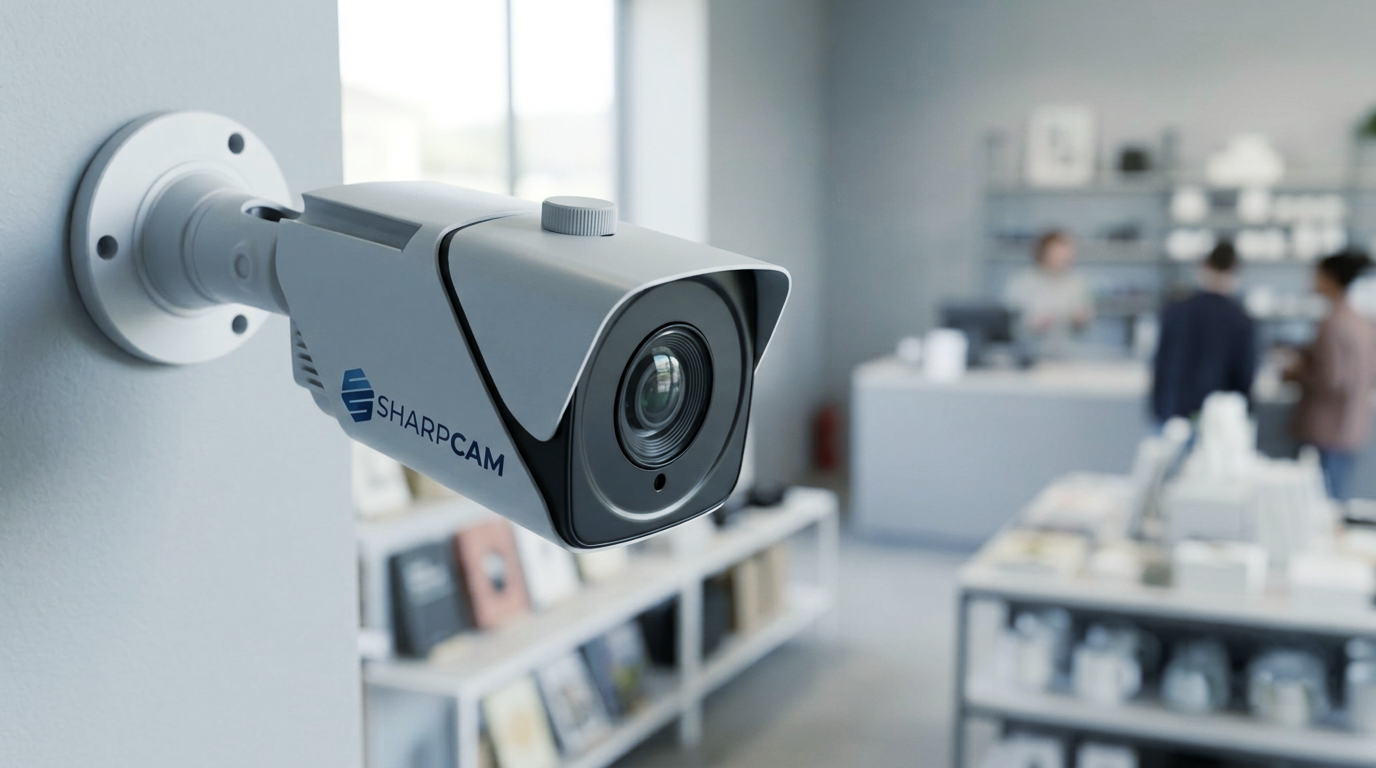
2MP cameras provide dependable image quality for basic surveillance and general overview monitoring. They are an excellent choice for environments where broad visibility is more important than long-distance identification or forensic-level detail. Their lower bandwidth and storage requirements also make them a cost-effective solution for smaller installations.
-
Small offices
Small retail shops
Indoor corridors
Reception areas
Storage rooms
Low-budget projects
General overview monitoring
-
Low bandwidth consumption
Lower storage requirements
Cost-effective deployment
Easy to integrate into standard networks
Ideal for simple day-to-day monitoring
-
2–4 Mbps per camera
RECOMMENDED SHARPCAM SERIES:
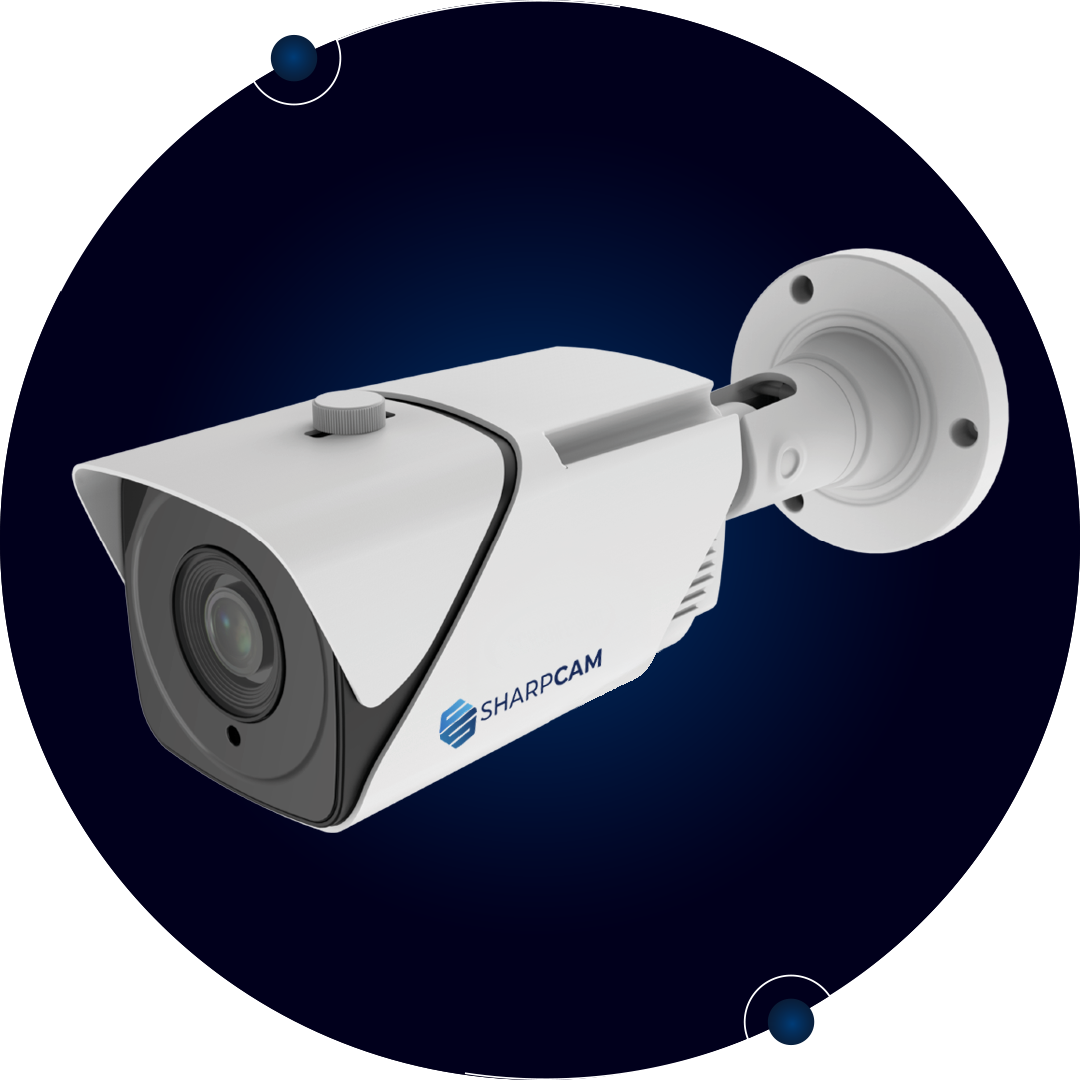
ECO SERIES
Eco Series delivers reliable performance where the primary objective is broad visibility rather than advanced identification.
5MP Super HD:
The Balance Between Detail and Efficiency
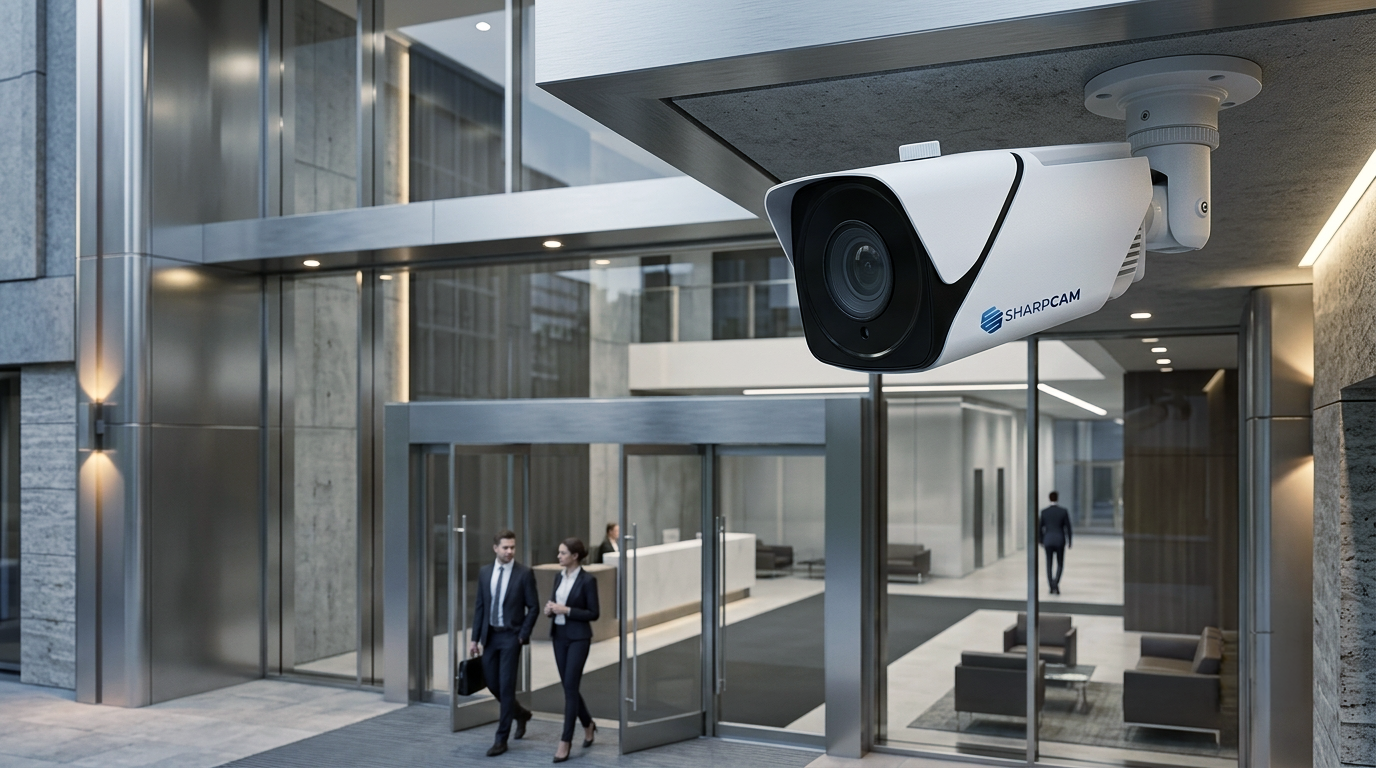
For most commercial environments, 5MP cameras provide the ideal combination of image quality, storage efficiency, and cost. They deliver noticeably sharper images than 2MP cameras while maintaining manageable bandwidth and infrastructure requirements, making them the preferred choice for many professional surveillance systems.
-
Building entrances
Access control points
Gates
Schools
Warehouses
Commercial facilities
Indoor and outdoor monitoring
-
Enhanced facial and object detail
Improved digital zoom
Excellent balance between performance and cost
Ideal for medium-risk environments
Suitable for both indoor and outdoor installations
-
4–8 Mbps per camera
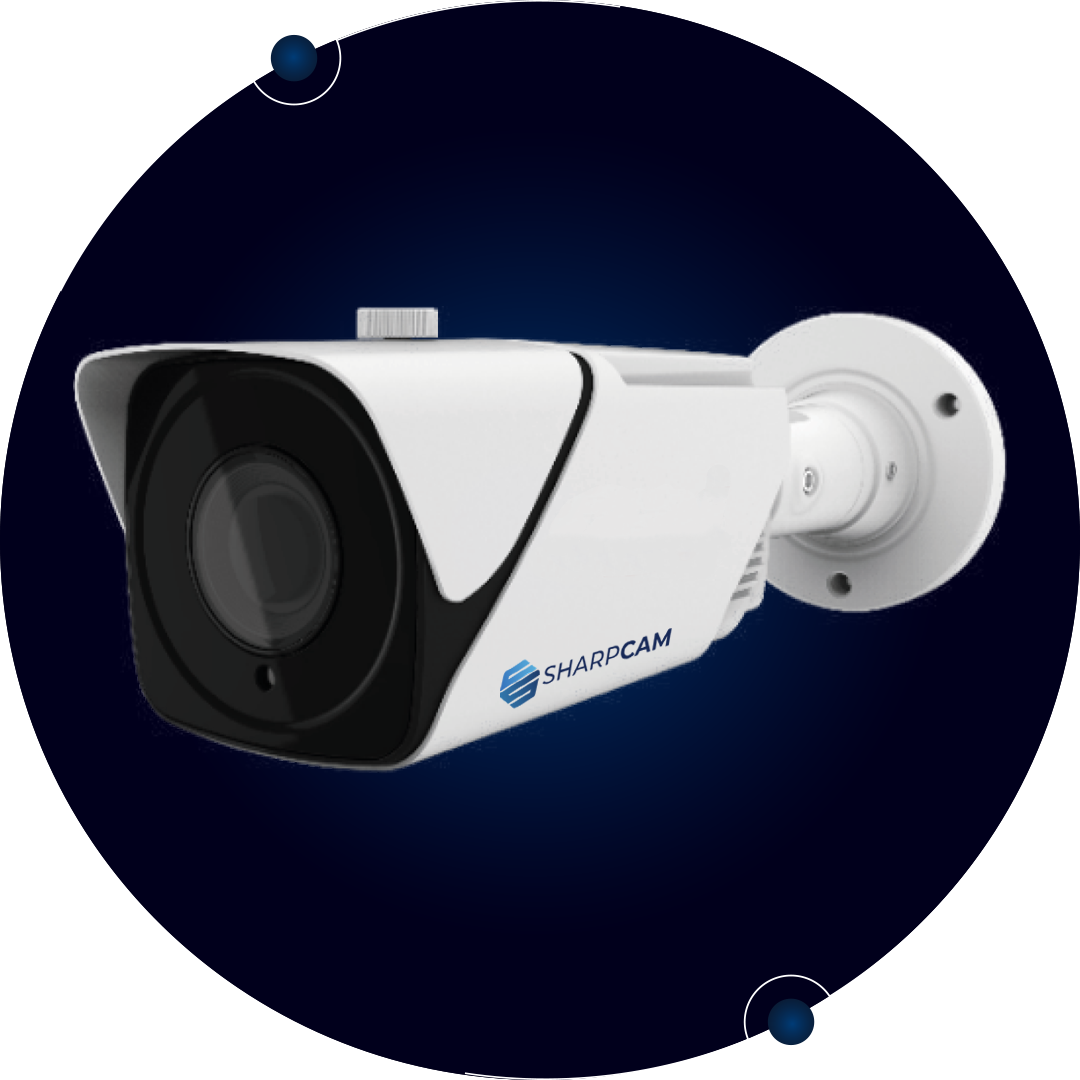
RECOMMENDED SHARPCAM SERIES:
PROJECT SERIES
Project Series delivers the image quality required where stronger identification and reliable image clarity are essential.
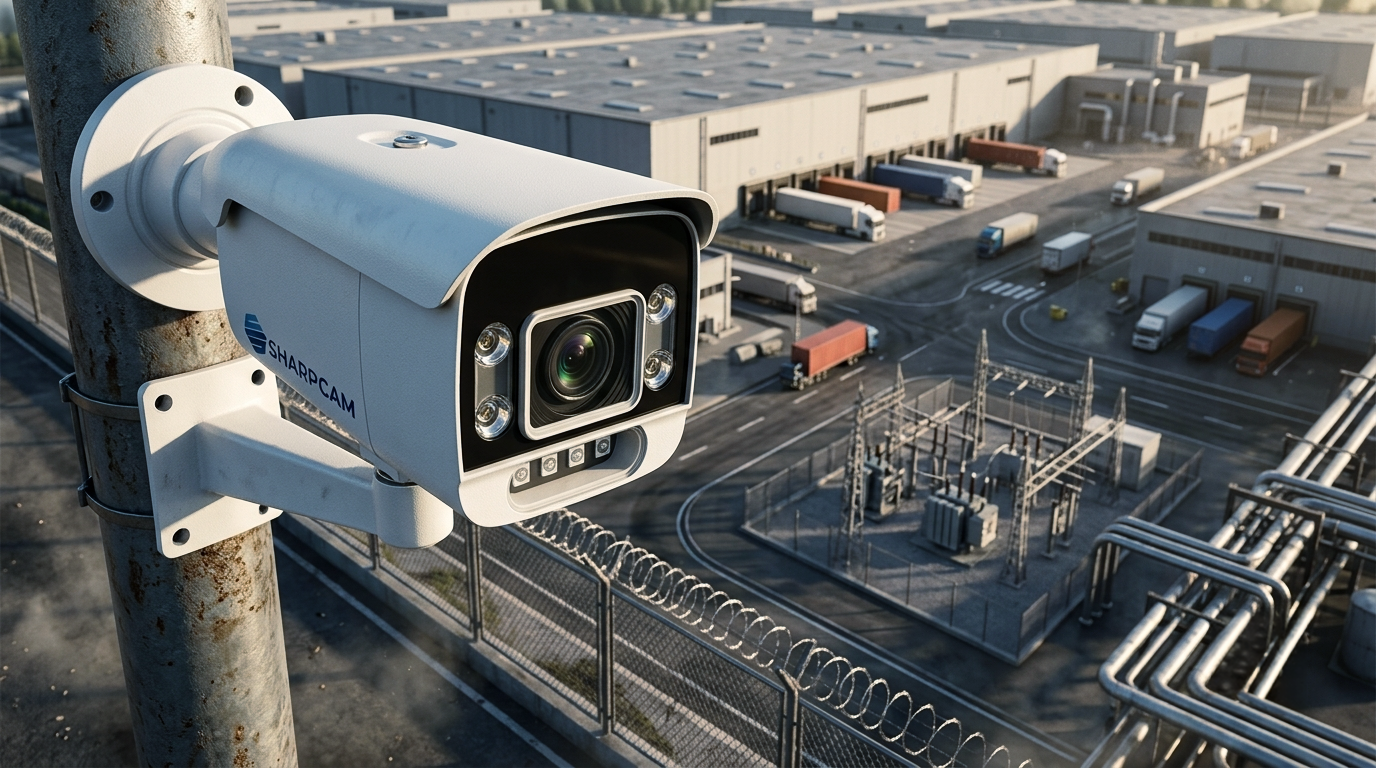
8MP 4K Ultra HD:
Maximum Detail for Critical Applications
8MP 4K cameras are designed for environments where image quality cannot be compromised. They provide exceptional detail across wide monitoring areas and allow operators to digitally zoom into recorded footage while retaining valuable forensic evidence. These cameras are ideal for high-security installations, critical infrastructure, and projects requiring advanced analytics.
-
Large commercial projects
Government facilities
Critical infrastructure
Large warehouses
Manufacturing plants
Outdoor yards
Parking facilities
Smart city applications
High-risk locations
-
Outstanding image clarity
Superior digital zoom capabilities
Improved forensic evidence collection
Excellent performance across wide scenes
Ideal for high-security environments
-
8–12 Mbps per camera
-
To maximize the performance of 8MP cameras, ensure your surveillance infrastructure includes:
Higher storage capacity
High-performance NVR or VMS server
Gigabit or 10 Gigabit network backbone
High-quality PoE or PoE+ switches
Proper VLAN network design
RAID storage for mission-critical projects
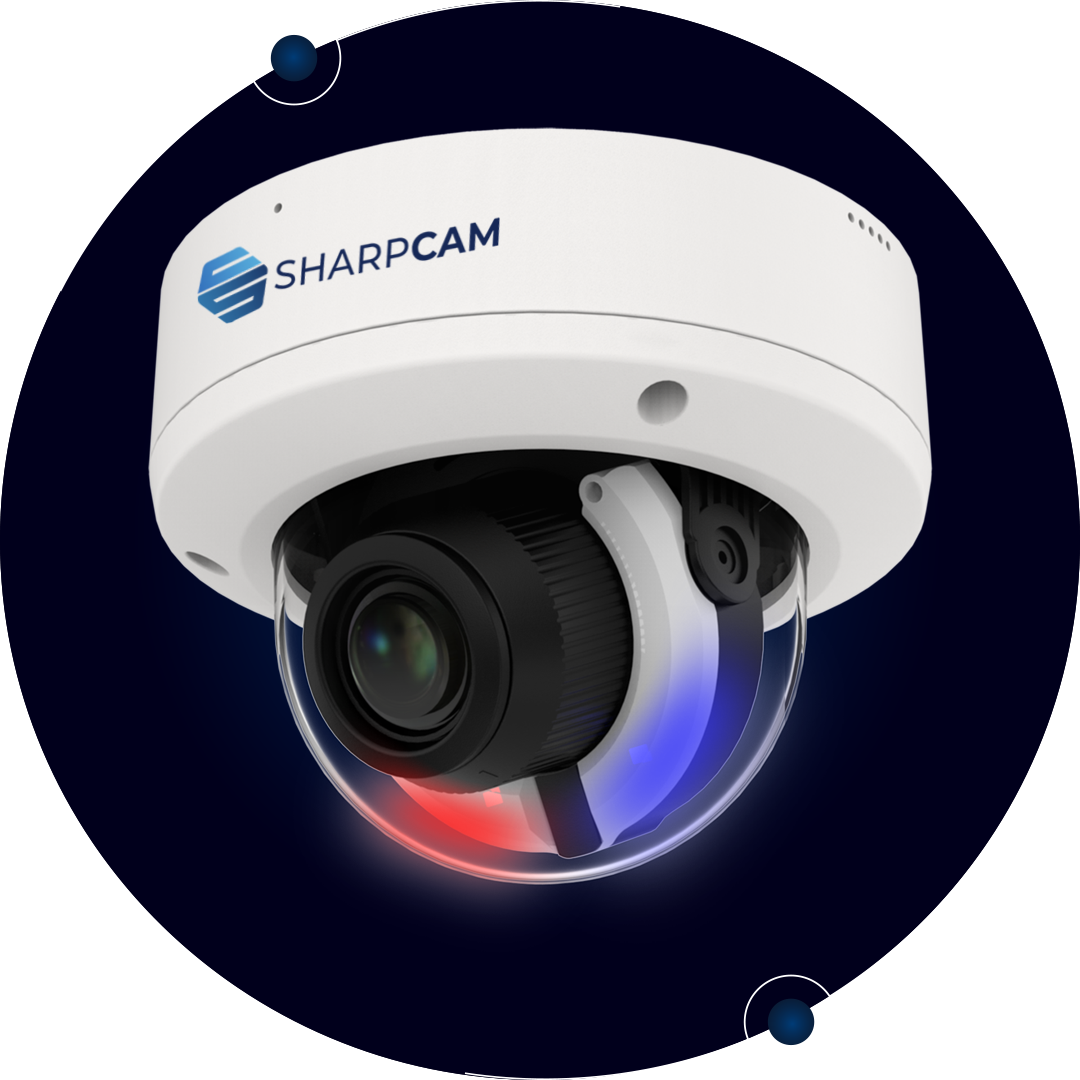
RECOMMENDED SHARPCAM SERIES:
DETERRENCE SERIES
Designed for professional surveillance, outdoor security, AI-powered analytics, and enhanced deterrence.
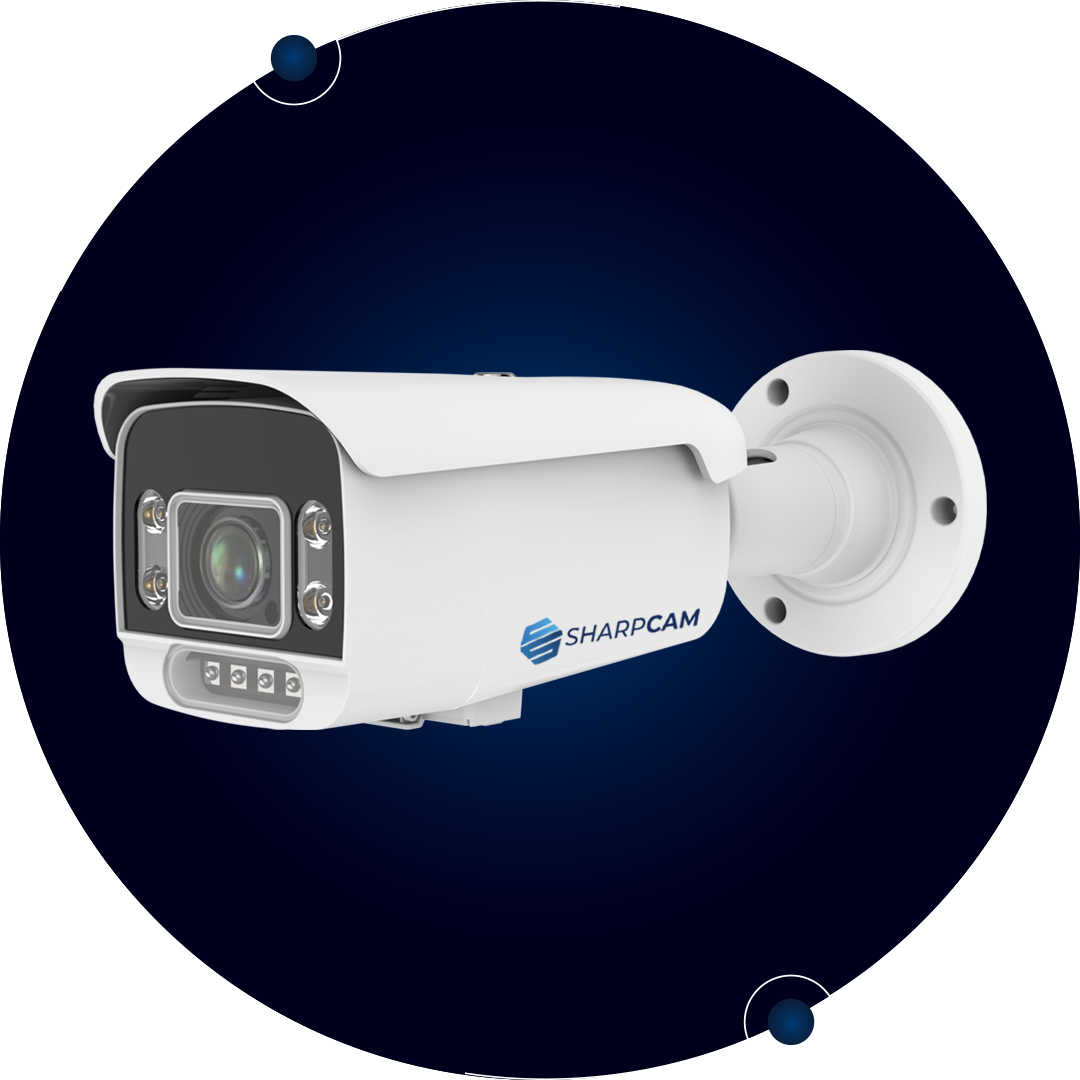
RECOMMENDED SHARPCAM SERIES:
ADVANCED SERIES
Recommended for enterprise deployments, critical infrastructure, forensic monitoring, and large-scale surveillance projects.
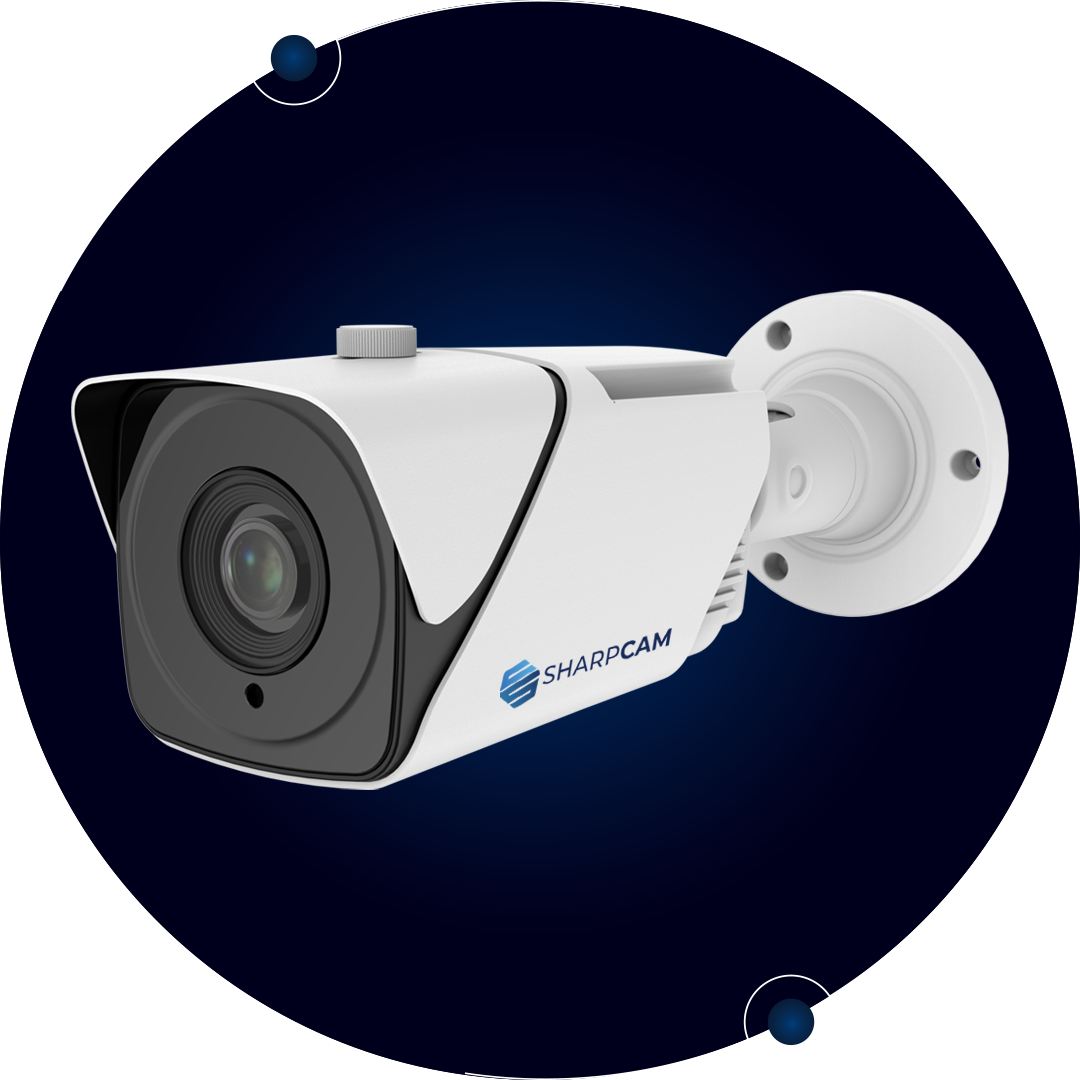
RECOMMENDED SHARPCAM SERIES:
SPECIAL LPR SERIES
Purpose-built for vehicle entrances, parking facilities, traffic management, and highly accurate license plate recognition.
Choose the
Right Lens for the Right Application
ADVANCED GUIDE: CHOOSING THE RIGHT SHARPCAM SECURITY CAMERA
3
The lens is just as important as the camera itself. It determines how much of a scene the camera captures, how much detail can be seen at different distances, and whether faces, objects, or license plates can be identified.
Even a high-resolution camera may fail to deliver useful evidence if the wrong lens is selected.
| Feature | Fixed Lens | Motorized Varifocal Lens |
|---|---|---|
| Best For | Standard indoor monitoring and predictable camera positions. | Professional projects requiring flexible viewing angles and precise detail. |
| Field of View | Fixed after installation. | Remotely adjustable to suit the scene. |
| Zoom & Focus | No optical zoom or focus adjustment. | Remote optical zoom and focus adjustment. |
| Installation | Quick and simple installation with minimal configuration. | Requires fine-tuning during commissioning. |
| Flexibility | Best when the viewing angle is known in advance. | Easily adapts to changing layouts or monitoring requirements. |
| Cost | Lower initial investment. | Higher investment with greater flexibility. |
| Recommended Series | Eco Series, Project Series | Project Series, Deterrence Series, Advanced Series, LPR Series |
Fixed Lens:
Best for Simple, Predictable Environments
A fixed lens camera has a predefined focal length that cannot be adjusted after installation. It's ideal when the camera location and viewing angle are already known.
-
Offices
Retail stores
Reception areas
Indoor corridors
Small rooms
General overview monitoring
-
Lower cost
Easy installation
Stable viewing angle
Minimal configuration
Ideal for standard layouts
-
No zoom adjustment
Less flexibility
Limited long-distance detail
Requires accurate planning before installation
-
Eco Series
Project Series
Choose a Fixed Lens if…
The camera location is fixed.
You need reliable overview monitoring.
Budget is a priority.
Motorized Varifocal Lens:
Best for Professional, Flexible Environments
Motorized varifocal cameras allow installers to remotely adjust zoom and focus after installation, making them ideal for changing environments and areas requiring precise detail.
-
Gates
Entrances
Parking areas
Warehouses
Perimeter protection
Vehicle monitoring
Face identification
-
Adjustable field of view
Remote zoom & focus
Better face and object recognition
Greater installation flexibility
Ideal for professional projects
-
Higher investment
Requires commissioning
More planning during system design
-
Project Series
Deterrence Series
Advanced Series
LPR Series
Choose a Motorized Varifocal Lens if…
You need to zoom in on people or vehicles.
The exact viewing angle isn't known yet.
The project requires adjustments.
Fixed or Motorized Varifocal: Practical Lens Selection Guide
| Application | Recommended Lens Type | Notes |
|---|---|---|
| Small office overview | Fixed 2.8mm | Wide view with basic detail. |
| Retail shop | Fixed 2.8mm / 3.6mm | Good for general monitoring. |
| Corridor | 3.6mm / 6mm or Varifocal | Avoid wasting pixels on walls. |
| Reception entrance | Motorized Varifocal | Better face detail. |
| Access control door | Motorized Varifocal | Adjust for reliable face capture. |
| Gate | Motorized Varifocal | Better control of the target area. |
| Parking entrance | LPR or Motorized Varifocal | Plate angle and lighting are critical. |
| Warehouse | Motorized Varifocal | Adjust according to viewing distance. |
| Perimeter | Motorized Varifocal | Narrower view provides more detail. |
| Low-budget project | Fixed Lens | Cost-effective solution. |
| Professional project | Motorized Varifocal | Greater flexibility and accuracy. |
Understanding Field of View
and Detail
ADVANCED GUIDE: CHOOSING THE RIGHT SHARPCAM SECURITY CAMERA
4
A camera lens determines how much of a scene is visible and how much detail can be captured. A wider lens covers a larger area, while a narrower lens focuses on a smaller area to capture greater detail at longer distances. Selecting the right focal length is essential for achieving reliable identification.
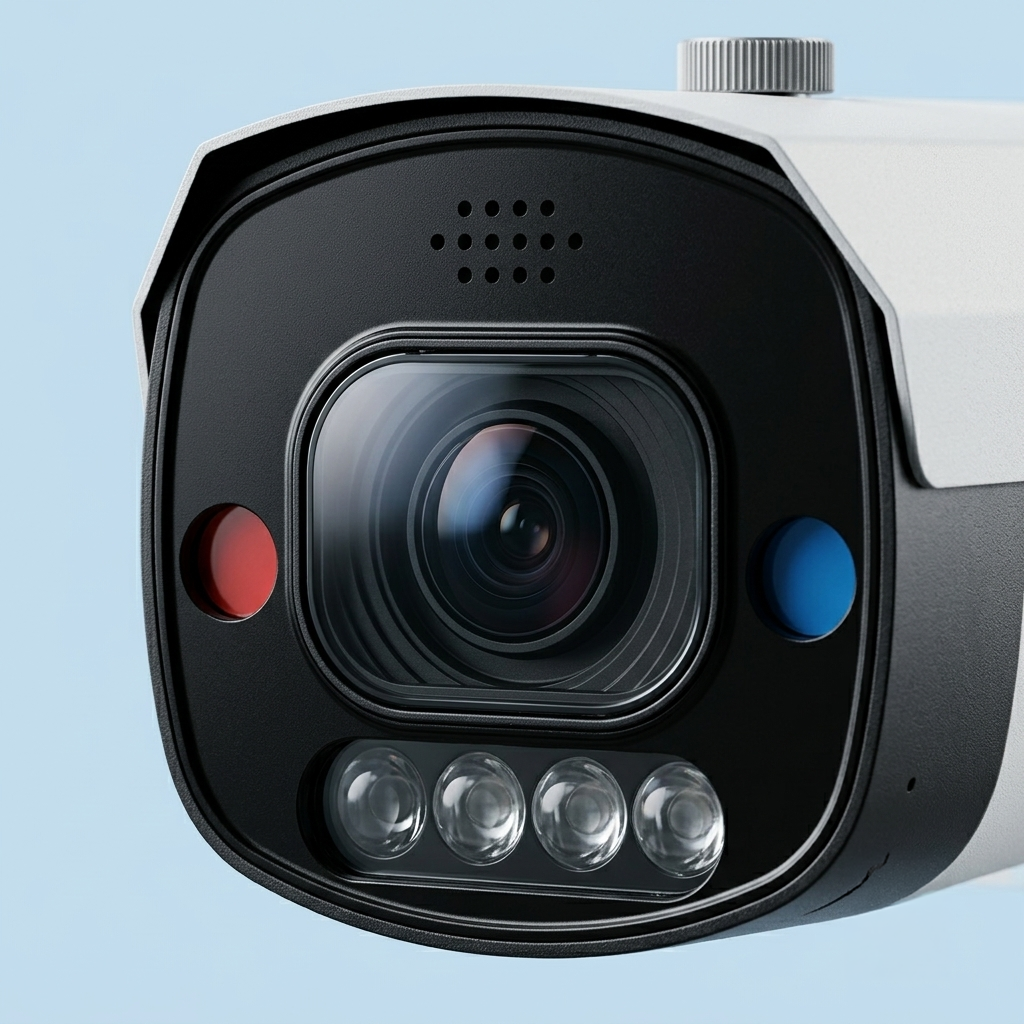
Provides a wide field of view, making it ideal for rooms, offices, retail shops, and general overview monitoring.
2.8mm Lens:
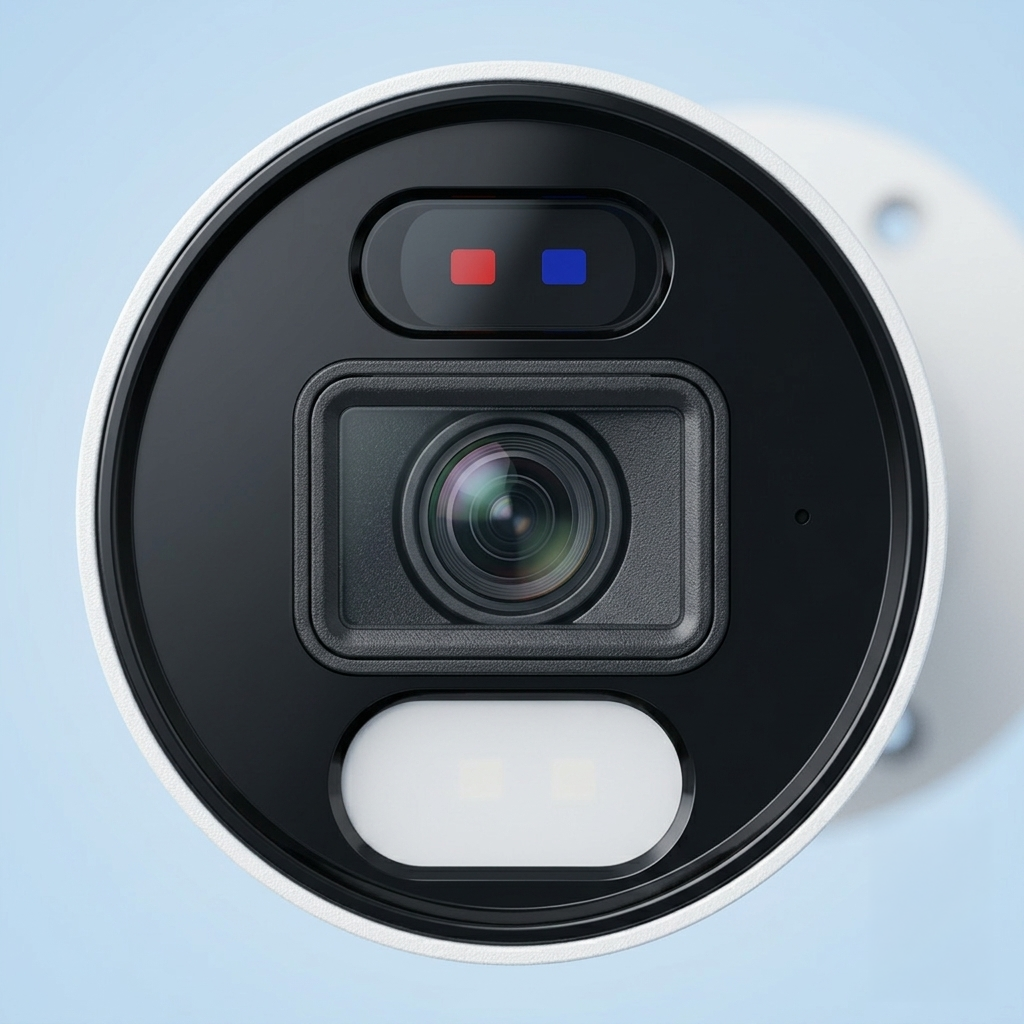
Offers a balanced field of view that works well for entrances, reception areas, and medium-sized indoor spaces.
3.6mm Lens:
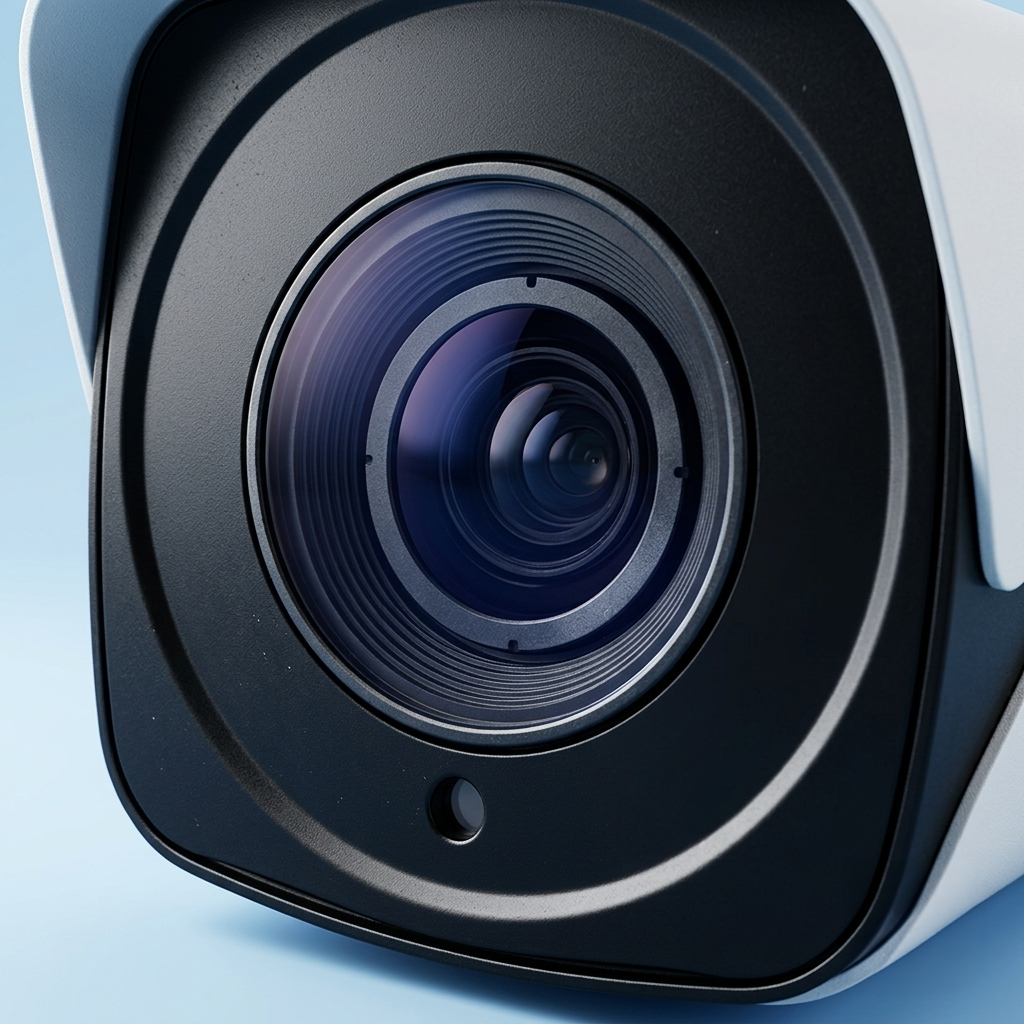
Captures a narrower field of view, allowing better detail at longer distances. Commonly used for corridors, warehouses, and focused monitoring areas.
6mm Lens:
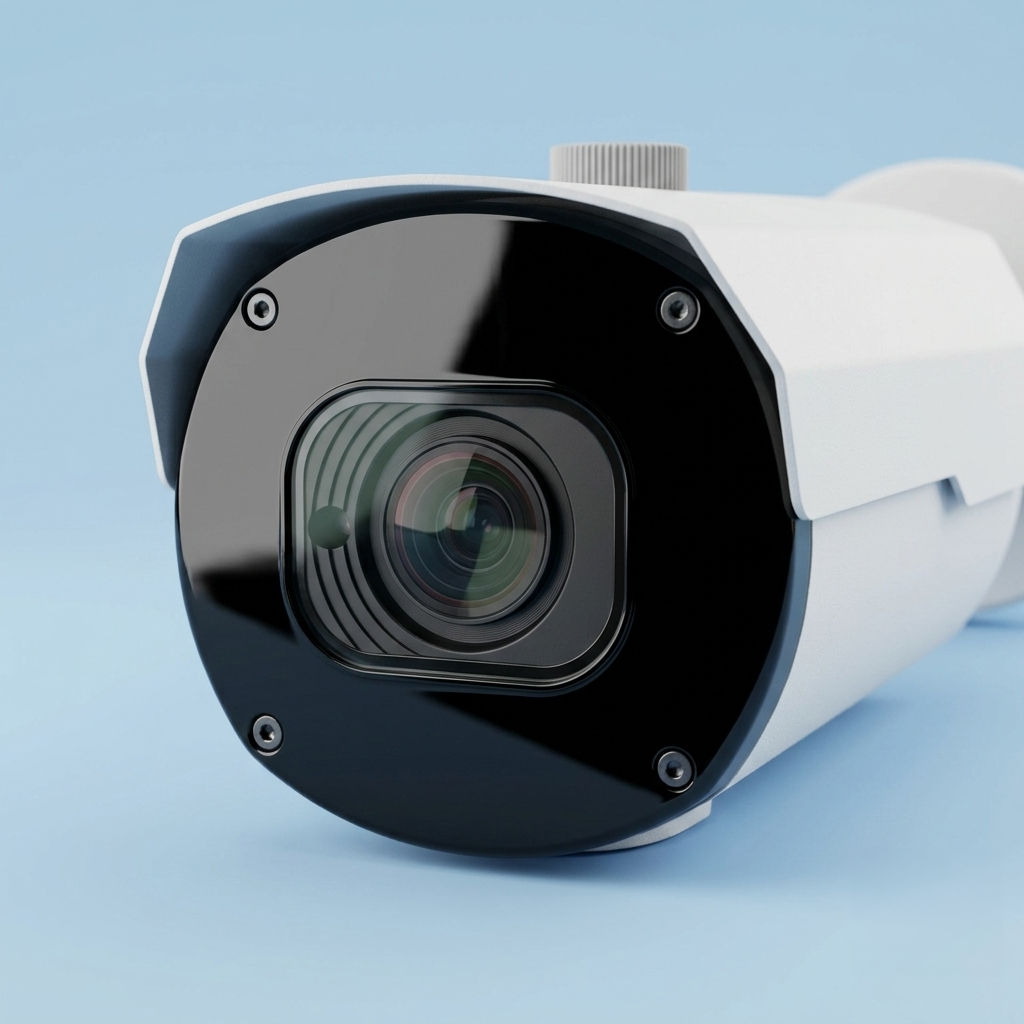
Provides a zoomed-in view for long-distance surveillance where identifying people or vehicles is the priority, such as gates, perimeters, and access points.
12mm Lens:
Mounting Height Matters More Than You Think
ADVANCED GUIDE: CHOOSING THE RIGHT SHARPCAM SECURITY CAMERA
5
The installation height of a camera directly affects image quality and identification accuracy. Mounting a camera too high increases coverage but reduces facial detail, while mounting it too low improves identification but may limit visibility and increase the risk of vandalism.
| Mounting Height | Best Application | Notes |
|---|---|---|
| 3–4 ft (1–1.2 m) | License Plate Recognition | Best for vehicle plate capture when installed at the correct angle. |
| 5–6 ft (1.5–1.8 m) | Face Recognition & Entry Points | Ideal for access control and facial identification. |
| 8–10 ft (2.5–3 m) | General Surveillance | Recommended for most indoor and outdoor monitoring. |
| 10–15 ft (3–4.5 m) | Warehouses, Parking & Wide Areas | Excellent overview but less suitable for facial identification. |
Build a Reliable Surveillance Infrastructure
ADVANCED GUIDE: CHOOSING THE RIGHT SHARPCAM SECURITY CAMERA
6
High-resolution cameras only perform well when supported by the right network and storage infrastructure. Designing the entire system—not just the cameras—ensures stable performance, reliable recording, and future scalability.
Make sure you have:
Cat6 structured cabling
PoE / PoE+ switches
Gigabit uplinks (minimum)
10G backbone for larger systems
Dedicated CCTV VLAN
Enterprise-grade NVR or VMS
RAID storage for critical environments
UPS backup for cameras, switches, and recorders
Proper cabinet ventilation and cable labeling
Bandwidth planning for every camera
Storage sizing based on bitrate and retention period
Estimate Storage Before Installation
ADVANCED GUIDE: CHOOSING THE RIGHT SHARPCAM SECURITY CAMERA
7
Bitrate determines how much bandwidth and storage each camera requires. As resolution increases, network capacity and storage requirements also grow.
Bitrate is influenced by:
Frame rate (FPS)
Video codec
Scene movement
Wide Dynamic Range (WDR)
Lighting conditions
Compression settings
AI metadata
Recording schedule
Continuous or event-based recording
| Resolution | Typical Bitrate per Camera | Infrastructure Impact |
|---|---|---|
| 2MP | 2–4 Mbps | Low bandwidth and storage requirements. |
| 5MP | 4–8 Mbps | Medium bandwidth and storage requirements. |
| 8MP | 8–12 Mbps | High bandwidth and storage requirements. |
For medium and large surveillance systems, always calculate storage capacity and network bandwidth before installation to avoid performance bottlenecks and unexpected storage shortages.
Design for Recognition, Not Just Recording
ADVANCED GUIDE: CHOOSING THE RIGHT SHARPCAM SECURITY CAMERA
8
License Plate Recognition (LPR) requires a dedicated camera design. Unlike general surveillance, LPR systems must consistently capture clear, readable license plates under varying vehicle speeds, lighting conditions, and weather. For reliable results, every part of the installation should be planned before deployment.
Key Design Considerations:
Camera height & angle
Vehicle speed & distance
Lane width
Lighting conditions & night performance
IR performance
Shutter speed
Lens zoom
NVR / VMS integration
Recommended Use:
LPR cameras are ideal for:
Parking entrances
Vehicle gates
Barrier systems
Road monitoring
Vehicle access control
Blacklist and whitelist vehicle management
While a standard surveillance camera can capture vehicles, it is not designed for reliable license plate recognition. For applications where plate identification is critical, a dedicated SharpCam LPR Series camera is always the recommended choice.
Find the Right Camera for Your Application
ADVANCED GUIDE: CHOOSING THE RIGHT SHARPCAM SECURITY CAMERA
9
By combining the recommendations covered throughout this guide, you can confidently select the right SharpCam series, resolution, and lens for your project. Use the table below as a quick reference when planning surveillance systems for different environments and security requirements.
| Project Type | Recommended Series | Resolution | Lens | Best For |
|---|---|---|---|---|
| Small Budget Project | SharpCam Eco Series | 2MP / 5MP | Fixed Lens | Small shops, offices, indoor monitoring, and general overview. |
| Small to Medium Commercial | SharpCam Project Series | 5MP / 8MP | Fixed or Motorized Varifocal | Entrances, access control, gates, schools, and commercial buildings. |
| Professional Outdoor Security | SharpCam Deterrence Series | 5MP / 8MP | Motorized Varifocal | Outdoor surveillance, perimeter protection, AI detection, and warehouses. |
| Large & Critical Projects | SharpCam Advanced Series | 8MP+ | Motorized Varifocal | Government, airports, factories, critical infrastructure, and large facilities. |
| Vehicle & Plate Recognition | SharpCam LPR Series | Dedicated LPR | Dedicated LPR / Varifocal | Parking gates, barriers, roads, vehicle access control, and license plate recognition. |
The Key to a Successful Surveillance System
ADVANCED GUIDE: CHOOSING THE RIGHT SHARPCAM SECURITY CAMERA
10
A professional CCTV system is about much more than choosing the camera with the highest megapixel count. Effective surveillance comes from designing every part of the system to work together—from camera selection and installation to network infrastructure and long-term storage.
A successful surveillance solution combines:
The right SharpCam series
The right camera resolution
The right lens type
Proper mounting height
Correct viewing angle
Appropriate lighting conditions
Reliable network infrastructure
Sufficient storage capacity
A dependable NVR or VMS
Professional commissioning and testing
The best camera isn't always the one with the most megapixels—it's the one that's designed for the job.
Let’s Build a Safer Future Together
Scharfe-Sicht’s industry-specific security solutions are designed to meet the highest standards of safety.